Comparison · 3 picks
Best Pickleball Paddles UK 2026: Picks by Budget Tier
Affiliate disclosure: we may earn a commission when you buy through links on this page, at no extra cost to you. Our verdicts are our own and are not influenced by compensation. As an Amazon Associate I earn from qualifying purchases.
UK paddle buying in 2026 splits into tiers: £20-30 entry, £40-80 first-carbon step-ups, and the £130-250 premium market. This guide picks one paddle per tier that you can genuinely order in the UK today, checked against retailer listings at the time of writing. Editorial disclosure: we have not personally tested every paddle in this guide. Picks are drawn from cross-referenced specs, manufacturer documentation and at least two independent third-party reviews per recommendation (Pickleball Effect's database and Pickleheads' editorial reviews are the backbone), plus our own paddle reviews. For the decision framework, see how to choose a paddle.
At a glance
All 3 options side by side.
 |  |  | |
|---|---|---|---|
| Price | See price | £30 | See price |
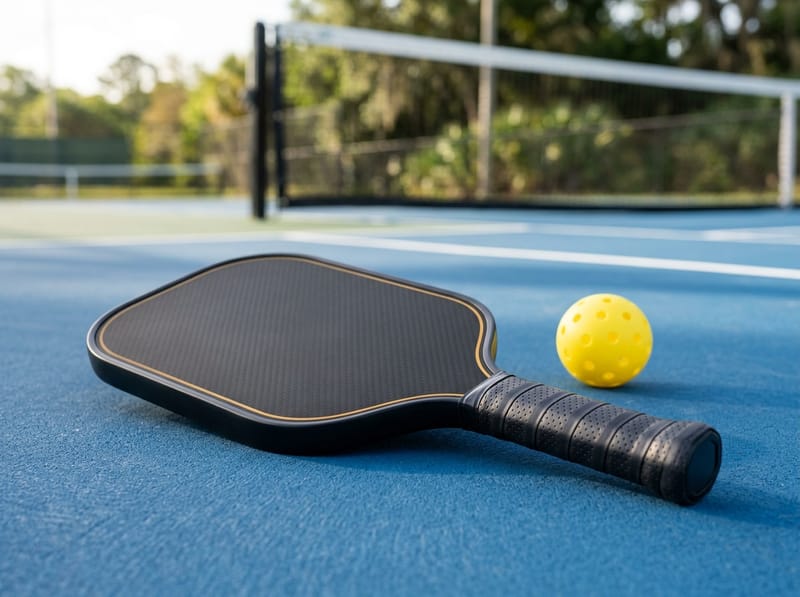
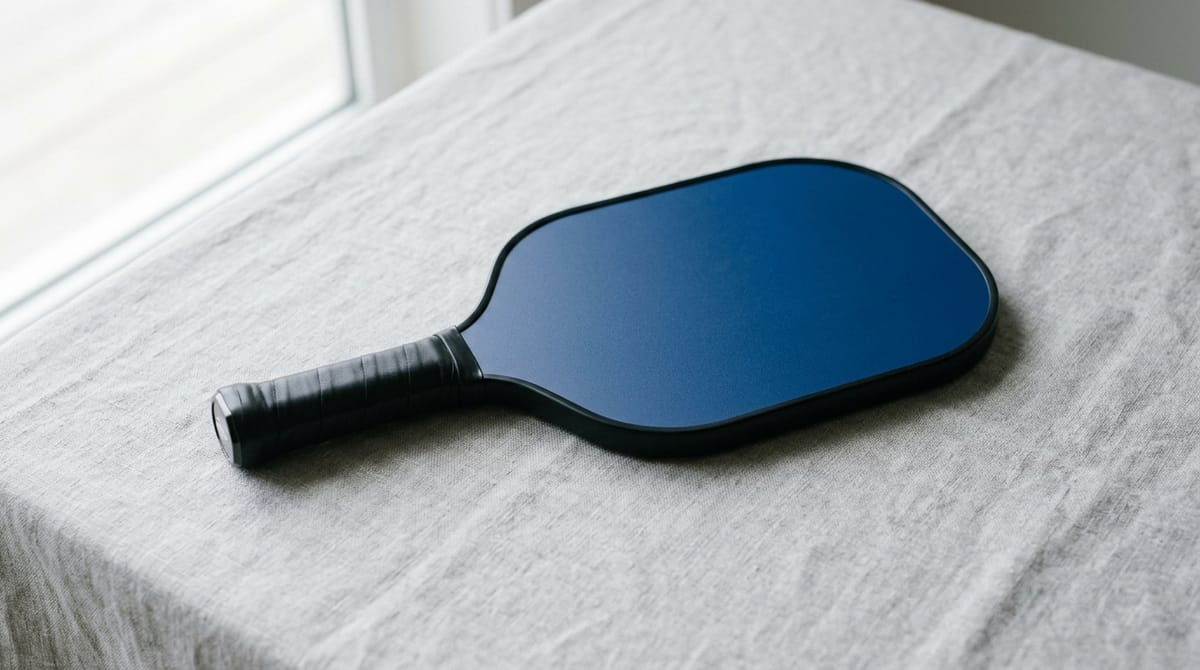
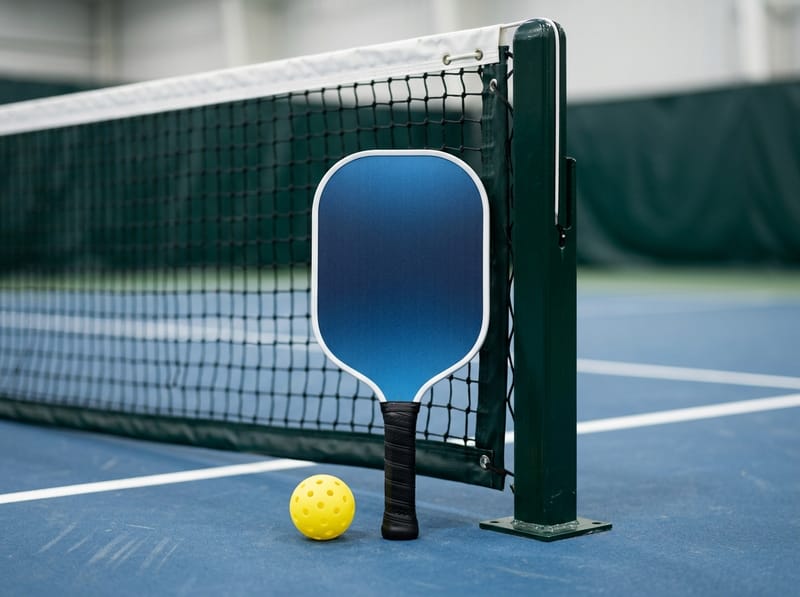
| Best for | The benchmark power-control paddle of 2026 and the pick the independent review press most consistently recommends for improving club players. | in-store at Decathlon, fibreglass face over a polypropylene core, a forgiving sweet spot, and a 365-day return policy that makes trying pickleball genuinely low-risk. | The cheapest verified route into a premium Selkirk. |
| Review | Read review → | Read review → | Read review → |
| Buy |
The picks in detail
JOOLA Ben Johns Perseus Pro IV 16mm
Bottom line. The benchmark power-control paddle of 2026 and the pick the independent review press most consistently recommends for improving club players. Raw carbon face, 16mm core with a foam-boosted throat, and UPA-A certified for sanctioned play. It sits at the top of our premium tier, so judge it on the live price shown on the buy button.
Pros
- The most-recommended power-control paddle in the independent review press (Pickleball Effect, Pickleheads) at this price point
- TechFlex foam at the throat adds flex, forgiveness and dwell time over earlier Perseus generations
- Raw Carbon Friction Surface holds spin well; 16mm core keeps the launch controlled
- UPA-A certified, so it is tournament-legal under the pro tour's equipment standards
Cons
- A 5.5-inch handle and elongated shape suit two-handed backhands but reduce face size for the same overall length
- 8.1 oz average build is quicker players' territory; beginners will find it demanding at the kitchen line
- JOOLA's Pro V and VI generations exist above it, though the on-court gain rarely justifies their premium
- Grip circumference is a slim 4.25 inches; larger hands will want an overgrip
More buying options (1)
- PDH Sports Check price View deal →
Decathlon Perfly Decathlon Pickleball Paddle 100
Bottom line. The easiest first paddle to buy in the UK: in-store at Decathlon, fibreglass face over a polypropylene core, a forgiving sweet spot, and a 365-day return policy that makes trying pickleball genuinely low-risk. Not USAPA-approved, so club social play only - which is exactly what your first month is.
Pros
- £30 is unbeatable for a first paddle to test whether pickleball sticks
- Decathlon UK retail makes it the easiest pickleball paddle to buy in the UK
- Returns policy via Decathlon's standard 365-day window
- Light enough for first-time players to swing comfortably
- Functional for casual social play
Cons
- Fibreglass face provides minimal spin vs carbon-fibre alternatives
- Not USAPA-approved - not legal for tournament play
- Build quality reflects the £30 price point - 6-12 months of regular use before noticeable degradation
- Sweet spot meaningfully smaller than mid-tier paddles
- No 13mm vs 16mm core options
Selkirk Vanguard Invikta 2.0
Bottom line. The cheapest verified route into a premium Selkirk. QuadCarbon face, soft X5 polymer core and the long Invikta handle that tennis converts settle into immediately. A proven previous-generation design at a step-down price - our full review covers who it suits.
Pros
- Elongated Invikta shape with a long handle suits tennis converts and two-handed backhands
- QuadCarbon face plus X5 polymer core gives a soft, dampened feel that flatters dinks and resets
- Lightweight (7.4 oz) and midweight (8.0 oz) builds cover different swing styles
- A previous-generation flagship rather than a current one, so it usually sits well below Selkirk's live RRPs - judge it on the price shown on the buy button
Cons
- An established design rather than a current flagship; Selkirk's newer LUXX line sits above it on feel
- No thermoformed edge or foam-injected throat, so it lacks the raw power ceiling of 2026's newest premium builds
- Elongated shape trades a little sweet-spot width for reach compared with standard shapes
- Softer response means pure power players will look to thermoformed rivals
More buying options (1)
- UK Pickleball Shop Check price View deal →
Is a pickleball bat the same as a pickleball paddle?
Yes. They are the same piece of equipment, so if you searched for a "pickleball bat" or a "pickleball racket" and landed here, the picks above are the ones you want. The official term is paddle: USA Pickleball's rulebook sets out "paddle specifications", and it is the word printed on packaging, used in tournament entry rules and shown on every UK retailer listing in this guide.
"Bat" and "racket" are informal British usages carried over from table tennis and tennis, and they are genuinely common here. Our own Search Console data for this site shows UK readers reaching these paddle guides from searches for "best pickleball bats", "best pickleball racket" and "best pickleball racquets" roughly as often as from "best pickleball paddles". Nothing about the kit changes with the name, so there is no separate product to shop for and no spec sheet that differs.
What the rulebook does fix is size. A legal paddle is no longer than 17 inches (43.2cm), and its length and width combined - including edge guard and end cap - cannot exceed 24 inches (61cm). There is no limit on thickness or weight. Any paddle sold as USAP-approved, including all three picks above, is inside those limits already.
The one place the wording does matter is across sports. A pickleball paddle is not a padel racket and not a table tennis bat: padel rackets are solid but much thicker, drilled with holes and built around a foam core for a heavier ball, while table tennis bats are far smaller and rubber-faced. If you are still choosing between the sports rather than the kit, see pickleball vs padel and pickleball vs table tennis; for the equipment rules in full, see our UK rules guide.
What happened to the £60-80 tier?
The first-carbon step-up tier is real and worth shopping, but UK availability churns too quickly for a standing recommendation - listings in this tier appear and disappear within weeks. If you are shopping this tier, check UK Pickleball Shop and PDH Sports for current raw-carbon options around £60-130, and prioritise a polymer core with a 14-16mm thickness whatever the brand badge says.
Buying checklist for the UK
Buy from a UK retailer first: UK warranty and returns apply, and you avoid the £30-60 in customs, VAT and courier fees a US import typically adds. Confirm the exact variant before checkout - most paddles ship in multiple thicknesses and weights under one name, and the model name alone does not specify. Check the returns policy for paddles specifically; Decathlon's 365-day policy is the outlier, not the norm.
Full reviews and head-to-heads
Each of the three picks has its own full review, and two of them have been put head-to-head against the paddles buyers most often cross-shop:
- Decathlon Pickleball Paddle 100 review
- Selkirk Vanguard Invikta 2.0 review
- JOOLA Ben Johns Perseus Pro IV 16mm review
- JOOLA Perseus vs Selkirk Invikta - the two premium picks compared directly.
- CRBN 1X vs Engage Pursuit Pro EX 6.0 - two thermoformed alternatives at the same level.
The other eleven paddles we have reviewed
The three picks above are one paddle per budget tier. We have reviewed eleven more, and the full write-ups carry the specs, the trade-offs and current UK availability - useful if your priority is spin, reach or a forgiving sweet spot rather than the tier headline.
Premium and tour-grade
- JOOLA Ben Johns Perseus - 16mm thermoformed, tour-grade build.
- Selkirk Power Air Invikta - elongated, built for reach and power.
- CRBN 1X - thermoformed, with a choice of 13mm or 16mm core.
- Selkirk Vanguard Control - raw T700 QuadCarbon aimed at soft hands and resets.
- Paddletek Tempest Wave Pro - graphite face with Paddletek's Smart Response core.
- JOOLA Hyperion CFS 16 - the original Ben Johns paddle, and the cheaper route to JOOLA power.
Mid-tier and control-first
- Six Zero Double Black Diamond - elongated control paddle with heavy spin.
- Gamma Mirage - balanced elongated composite, suited to 3.0-3.5 all-court players.
- Onix Z5 - the original wide-body composite, still the forgiving-sweet-spot benchmark.
Reviewed, but hard to buy here
- Diadem Warrior - strong spin, but the original is no longer sold in the UK; the review covers the V2 successor.
- Engage Pursuit Pro EX 6.0 - no UK retail channel at all, so it means importing from Engage's US store with the shipping and import charges that brings.