How to Choose a Pickleball Paddle UK 2026
How to choose a pickleball paddle UK 2026: weight, core thickness, face material, shape, grip size, budget. Decision framework rather than specific picks.
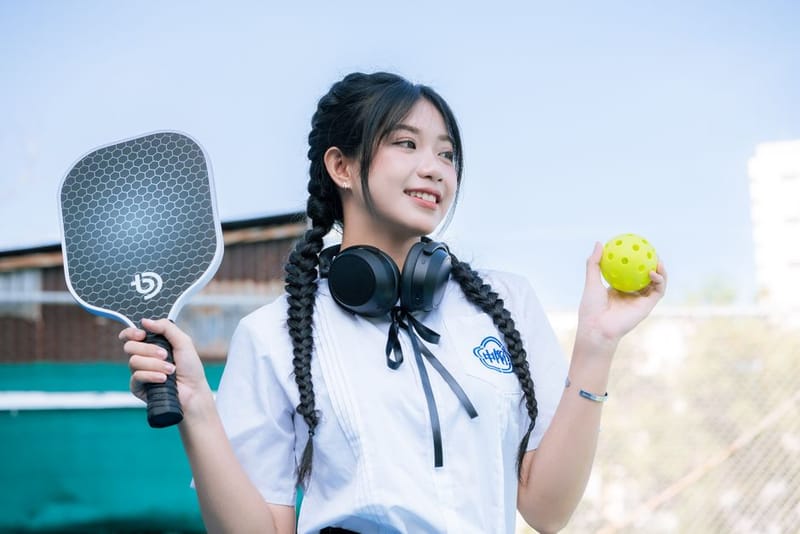
UK pickleball paddle choice has gone from a coin-flip in 2023 to a structured decision tree by 2026 - too many credible options now, and meaningfully different feel between them. This guide walks through the six decisions in order, with the typical UK price ranges and what each axis actually changes about how the paddle plays.
What's your budget tier?
Four UK price tiers in 2026, each with different decision space:
- Entry (£40-£70): Onix Z5 (Pickleball), Selkirk Latitude, Niupipo composite. Good enough for beginner club play; clearly lower-spec than the next tier up.
- Mid-range (£70-£140): Paddletek Tempest Wave, Gamma Razor, Diadem Warrior. Where most UK club players spend; meaningfully better feel and durability than entry tier.
- Premium (£140-£200): Selkirk Vanguard, JOOLA Hyperion, CRBN 1, Engage Pursuit Pro EX 6.0. Tournament-tier with carbon faces and thermoformed construction.
- Tournament flagship (£200-£260): JOOLA Ben Johns Perseus, CRBN 1X, Selkirk Power Air Invikta. Top-tier thermoformed paddles used in pro play.
Below £40 is too cheap - the paddle either won't last or won't play correctly. Above £260 is diminishing returns unless you're competing at 4.5+ tournament level.
What weight should you choose?
Pickleball paddles range from 6.8 to 8.5 oz. Three weight categories:
- Light (7.0-7.4 oz): Fast hand-speed at the kitchen, easier on the elbow. Best for players prioritising touch over power, players with wrist or elbow issues, and players who serve and volley.
- Mid (7.6-8.0 oz): The default for most UK club players. Balanced power and control. Most paddles in the mid-range £70-£140 tier sit here.
- Heavy (8.0-8.4 oz): More power, more pop on drives and smashes, but slower hand speed at the kitchen and more elbow load. Best for players coming from tennis backgrounds.
Players new to pickleball almost always overestimate how much weight they need. Start at 7.6-7.8 oz unless you have specific reason to go heavier; you can always add lead tape later for incremental weight without buying a new paddle.
What core thickness should you choose?
Pickleball paddle cores are polypropylene honeycomb, ranging from 11 mm to 19 mm thick. Two main categories:
- 13-14 mm (thin): More power, faster ball off the face, but smaller sweet spot. Better for aggressive 3.5+ players who attack from the baseline.
- 15-16 mm (thick): More control, larger sweet spot, softer feel for dinks and resets. The default for most modern paddles and the better choice for beginners.
The 2024-2026 trend has been clearly toward 16mm - even tournament players have moved off the 13mm thin paddles popular in 2022-2023. For UK club players in 2026, default to 16mm unless you specifically want the power trade-off of 13-14mm.
What face material should you choose?
Three face materials dominate UK paddles in 2026:
- Fibreglass / composite (£40-£100): Older technology, smoother face, less spin generation. Fine for beginners. Most entry-tier paddles use this.
- Graphite (£70-£150): Lighter and stiffer than fibreglass. Quick hands at the kitchen. Mid-tier paddles often use graphite or a graphite-composite blend.
- Raw carbon / T700 carbon (£140-£260): The modern premium face. High friction surface for spin generation; energy return for pace on drives. Tournament-tier paddles almost exclusively use this.
For most UK club players in 2026, the meaningful axis is composite vs raw carbon. Composite is fine for casual play; raw carbon is genuinely better for spin generation and pace. The £80-£100 premium for raw carbon is worth it for regular 3.0+ players; less so for occasional social play.
What shape should you choose?
Two main pickleball paddle shapes:
- Standard (16 × 7.875 inches): Wider, more forgiving sweet spot. Better for beginners and recreational players. Almost all entry and mid-tier paddles are standard shape.
- Elongated (16.5 × 7.5 inches): More reach, narrower sweet spot. Better for aggressive players who want extra leverage on drives and smashes. Common in tournament-tier paddles.
For first paddle: standard shape. For second paddle (12+ months in): try elongated if you're playing tournament-tier and want more reach. Most UK club players settle on standard shape after experimenting with both.
What grip size should you choose?
Pickleball paddle grip sizes are simpler than tennis - just two or three sizes per brand:
- 4.0-4.125 inch (small): Junior players, women with small hands, men who prefer wrist snap on smashes.
- 4.25 inch (standard adult): Default for most adult players.
- 4.375-4.5 inch (large): Larger-handed men, players who want forearm relief over long sessions.
Use the index-finger gap test: wrap your hand around the handle as if shaking hands, then try to slide the index finger of the other hand into the gap between your fingertips and the base of your thumb. If it fits comfortably, the grip is right. Add an overgrip to size up; don't try to size down.
How does the decision change for your playing style?
Five common player profiles and the paddle they'd choose:
- Beginner social player: 7.6 oz / 16mm core / composite or graphite face / standard shape / L2-L3 grip. £60-£100 budget. Onix Z5, Selkirk Latitude, Niupipo are good options.
- Intermediate club regular: 7.8 oz / 16mm core / raw carbon face / standard shape / L3 grip. £120-£180 budget. Selkirk Vanguard, JOOLA Hyperion, Diadem Warrior.
- Aggressive 4.0+ tournament: 8.0-8.2 oz / 16mm core / raw carbon / elongated shape / L3 grip. £180-£250 budget. JOOLA Perseus, CRBN 1X, Selkirk Power Air Invikta.
- Control-first dinker: 7.4-7.6 oz / 16mm core / raw carbon / standard shape / L3 grip. £120-£200. Paddletek Tempest Wave Pro, Engage Pursuit Pro EX 6.0.
- Tennis-background convert: 8.0 oz / 14mm core / raw carbon / elongated shape. Heavier head, more power, accepts slower hand speed at the kitchen. £150-£250.
For most UK players, the intermediate profile is the right target after their first 3-6 months. Don't go premium for a first paddle - the differences are subtle enough that you won't appreciate them until you've spent time learning the sport.
Frequently asked questions
Do I need an expensive paddle to start pickleball?
How heavy should my pickleball paddle be?
Is 13mm or 16mm core thickness better?
Is raw carbon worth the £80+ premium over composite?
Should I get a standard or elongated paddle as my first?
What grip size do I need?
The bottom line
For UK pickleball players choosing a paddle in 2026, the practical decision is: start with a £60-£100 entry-tier paddle if you're new (standard shape, 16mm core, 7.6 oz, composite face); upgrade to a £120-£180 mid-tier raw carbon paddle once you're playing weekly and have consistent technique; only step up to the £200+ tournament tier if you're playing competitive 4.0+ matches and the marginal improvements matter to results.
The most common UK club paddle mistakes are: over-spending on a first paddle (the differences are wasted on inexperienced technique), choosing 13mm core when 16mm would be more forgiving, and getting the wrong grip size (always run the index-finger gap test).
For specific paddle recommendations, see our best beginner paddles UK guide and 2026 UK pickleball paddle buying guide. Pickleball's official rules and equipment specifications are governed by Pickleball England.