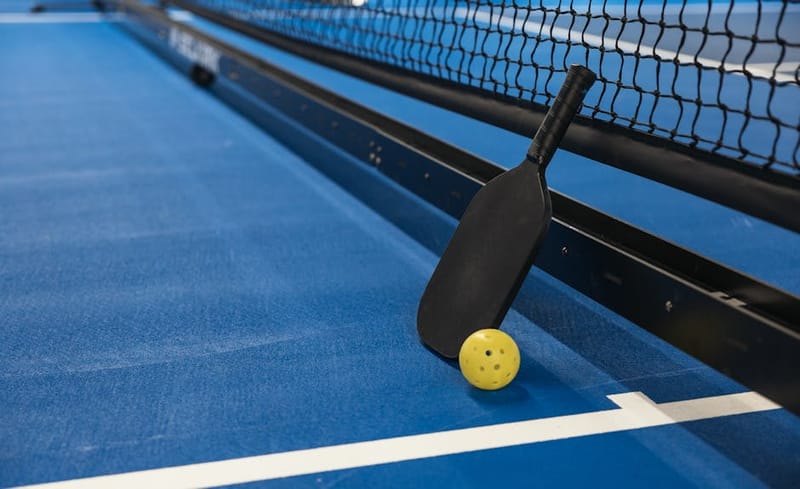
Comparison · 2 picks
Pickleball vs Padel UK: Which Should You Try First?
Affiliate disclosure: we may earn a commission when you buy through links on this page, at no extra cost to you. Our verdicts are our own and are not influenced by compensation.
Pickleball and padel are the two fastest-growing racket sports in the UK, and the question we hear most from readers new to both is the same one: which should I try first? The honest answer for most people in 2026 is pickleball - it is cheaper to start, easier to learn, and the indoor venue network has grown enough that almost every UK city now has at least one club. Padel is the better long-term sport if you already enjoy tennis or squash and live near one of the rapidly multiplying padel clubs, but it asks more of you on day one: more money, more lateral movement, and a steeper rules curve.
At a glance
All 2 options side by side.
| Pickleball | Padel | |
|---|---|---|
| Best for | The right first pick for almost everyone - cheapest to try, easiest to learn, and welcoming to a wide age range. | The smarter long-term sport if you already enjoy tennis or squash and live near one of the UK's rapidly multiplying padel clubs. |
| Review | Read review → | Read review → |
The picks in detail
Pickleball
Bottom line. The right first pick for almost everyone - cheapest to try, easiest to learn, and welcoming to a wide age range.
Pros
- Lowest barrier to entry - beginner paddles from £25-£40, lessons widely available at sports halls and leisure centres
- Smaller 13.4m × 6.1m court - easier on the legs and forgiving for older players or anyone returning to sport
- Simple traditional scoring to 11 points (side-out) makes the first session welcoming for total beginners
- Faster to learn the basic rallies - most players can sustain a points-based game inside a single 90-minute session
Cons
- Smaller UK venue network - Pickleball England lists roughly 100 dedicated venues in 2026 (mostly converted badminton or tennis courts) vs 559 LTA-affiliated padel courts
- Fewer dedicated outdoor courts - most UK pickleball is played indoors on shared multi-sport floors
- Higher-level pickleball can feel limiting if you want a sport with more athleticism and movement variety
- Tournament infrastructure is younger - fewer ranked events than padel in the UK
Padel
Bottom line. The smarter long-term sport if you already enjoy tennis or squash and live near one of the UK's rapidly multiplying padel clubs.
Pros
- Vastly bigger UK court network - 559 LTA-affiliated padel courts at the end of 2025, more than doubling since 2023
- Enclosed glass-walled court adds genuinely new tactics - the walls are in play, which keeps long rallies alive
- Tennis-style 0/15/30/40 scoring is familiar to anyone with a racket-sport background
- Stronger UK tournament pathway through the LTA, with ranking points and Premier Padel London 2026 raising the sport's profile
Cons
- Higher equipment outlay - competent beginner rackets start around £80-£100, premium models £180-£250
- Larger 20m × 10m court demands more lateral movement and is harder on older knees or post-injury players
- Court hire is more expensive - a 90-minute peak slot typically runs £24-£40 per court (split between four players)
- Steeper rules curve - the wall-bounce rules and double-fault structure add complexity for total beginners
How the two sports actually differ
The headline difference is physical scale. A pickleball court is 13.4 metres long by 6.1 metres wide - almost exactly the size of a badminton court - and uses a solid composite paddle to hit a perforated plastic ball over a 91cm-high net. A padel court is 20 metres by 10 metres, enclosed on all sides by glass and mesh walls that are in play, and uses a perforated solid racket to hit a slightly depressurised tennis ball. The pickleball ball travels relatively slowly because of the air-resistance of its holes; the padel ball plays much faster and uses the walls to extend rallies that would have ended on a regular tennis court.
The court size difference is the single most useful filter when you're choosing which to try first. If you've not played a racket sport in a while, the smaller pickleball court is forgiving - you can cover it without sprinting and the points don't punish a slow start. The padel court rewards lateral footwork and reading rebounds off the back glass, which is part of what makes it fun once you've played for a few weeks, but it does mean a higher fitness floor for new players.
Equipment cost: what you actually spend in your first month
Pickleball wins on cost by a clear margin. A competent beginner paddle runs £25-£40 (entries from brands like Joola Method, Decathlon's Artengo range, or Babolat's lower line), a pack of three outdoor balls is around £8-£12, and most clubs supply spare balls anyway. Pickleball England's local clubs frequently lend paddles for a first session, so it's plausible to play your first three or four sessions without owning any equipment at all. Once you're hooked, an upgrade paddle in the £60-£120 range will see you through your first year of recreational play.
Padel starts higher. Beginner rackets in the £80-£100 range (the Bullpadel Vertex Comfort, the Adidas Drive 3.3, the Head Speed Pro) are the entry point for buying your own. Premium rackets - the Bullpadel Vertex 04 Comfort, the Nox AT10 Genius, the Head Delta Pro - run £180-£250. Three padel balls are £8-£12 (Head, Babolat, Wilson), and most clubs include balls in the court hire. You'll be looking at £100-£200 for your first padel kit including a basic racket, balls, and an overgrip pack. For a full breakdown of UK options, see our sister site's 2026 padel racket guide and our own 2026 UK pickleball paddle guide.
Learning curve: how quickly will you have fun?
Pickleball is the easier sport to learn from scratch. The rallies start slow because the perforated ball decelerates quickly, the scoring is straightforward (first to 11, win by two, side-out service), and the non-volley zone (the "kitchen") is the only really new concept for someone with any racket-sport background. Most first-time players can sustain a recognisable game inside an hour. Our UK beginner's guide covers the rules and basic strategy, and the rules explainer walks through scoring step by step.
Padel asks more of new players. The tennis-style scoring will be familiar to anyone who's played tennis, but the wall rules are genuinely new: the ball must bounce on the floor before hitting any wall, and you can play it off your own back wall after the bounce. Combined with the fact that padel is always played in doubles (singles padel exists but is rare in the UK), the first session involves learning new rules, new positioning, and new shot-selection logic simultaneously. Most clubs run beginner clinics specifically for this reason - try one before booking your first standalone court if you've not played before.
UK venue availability: where can you actually play?
This is the area where padel has pulled clearly ahead. The LTA reports 559 affiliated padel courts in the UK at the end of 2025, with a growth trajectory that has roughly doubled the network every two years since 2021. Major UK cities - London, Manchester, Birmingham, Edinburgh, Glasgow - now have multiple dedicated padel clubs, and chains like Pure Padel, Padel4All, and Rocket Padel have rolled out purpose-built facilities. Our sister site's UK padel venue guide maps the current network.
Pickleball's UK venue network is smaller but growing fast in a different way: rather than purpose-built courts, most UK pickleball is played on lined badminton or tennis courts at leisure centres, sports halls, and university gyms. Pickleball England lists around 100 venues hosting regular sessions in 2026, with strong concentrations in London and Manchester, plus active communities in most county towns. The UK venue guide has the current city-by-city picture.
If venue convenience is a deciding factor, check both sports' venues within 30 minutes of your home before committing. In some UK regions padel will be on your doorstep and pickleball further away; in others (the West Midlands and the North East are good examples) the reverse is true. Neither sport has saturated the UK - both are adding venues monthly.
Who each sport suits best
Pickleball fits a wide age range - it's the only racket sport in either category where 12-year-olds and 75-year-olds regularly share a club night and have competitive games. If you're returning to sport after an injury, recovering joint mobility, or just want a social game that doesn't punish you for being out of practice, pickleball is the easier door to walk through. It also tends to work well for friend groups with mixed sporting backgrounds because the equalising effect of the slow ball means a complete beginner can play meaningfully against an experienced racket-sport player inside an hour.
Padel suits players who want a more athletic game and either already play tennis or squash, or are happy to put in the first three or four sessions of clinic time to get over the wall-rules learning curve. It is a more strenuous sport - more lateral movement, more sprinting between the net and the back glass - so it suits players who can move freely and recover between long rallies. Padel also lends itself well to regular doubles partnerships because you always play in pairs, which can make the social side easier if you have a fixed playing partner.
Which should you try first?
For most UK readers new to both sports, pickleball is the better first pick in 2026. The lower equipment cost, the gentler learning curve, and the widespread access to leisure-centre and sports-hall venues mean you can sample the sport for a single evening's session and a £25 paddle. If pickleball doesn't suit you, you're not out of pocket. Padel is then the natural next sport to try once you have a racket-sport reference point - the rules curve is shallower if you've already learned where your court positioning matters and how to read pace from an opponent.
If you already play tennis or squash regularly, or you live within 30 minutes of a Pure Padel or LTA-affiliated padel club, the case for starting with padel is stronger: the tennis-style scoring is already familiar, the wall play scratches a different itch than your existing sport, and the UK tournament ladder is more mature. Either way, neither sport requires loyalty - many UK players we know play both, treating pickleball as the easy social evening and padel as the more athletic Saturday-morning game. For the padel-first perspective on the same question, see our sister site's padel vs pickleball comparison.
Frequently asked questions
Is pickleball or padel growing faster in the UK?
Can I play both pickleball and padel with the same equipment?
Which sport is easier on the joints?
Do I need a coach to start with either sport?
Which sport is cheaper to play long-term?
Ready to start pickleball?
Our 2026 UK pickleball paddle guide lists the best beginner and upgrade paddles available in the UK, with current pricing.