Pickleball Glossary: Key Terms Explained (UK 2026)
A plain-English pickleball glossary: the kitchen, dink, Erne, ATP, third shot drop, stacking, DUPR and more key terms explained for UK players.
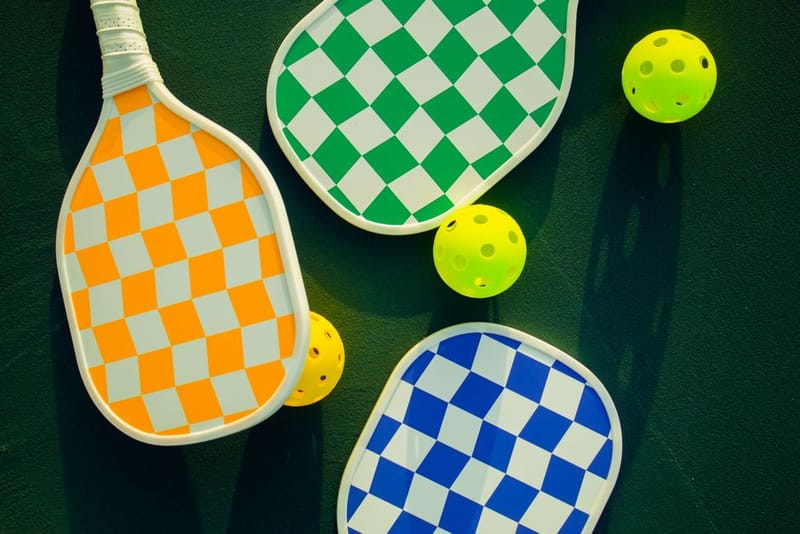
Walk onto a pickleball court and you'll hear a stream of unfamiliar words - kitchen, dink, Erne, banger. It's friendly jargon, but it can baffle newcomers. This plain-English glossary explains the key terms you'll actually encounter, grouped by theme, with links to our deeper guides where you want more.
Court and rules terms
- Kitchen (non-volley zone, NVZ) - the seven-foot zone either side of the net where you can't hit the ball out of the air. See our kitchen rules guide.
- Volley - hitting the ball out of the air before it bounces (legal everywhere except the kitchen).
- Fault - a rule violation that ends the rally (out, into the net, kitchen violation, etc.).
- Let - a serve that clips the net but lands in; in most current rules it's played, not replayed.
- Double bounce rule (two-bounce rule) - the ball must bounce once on each side before either pair may volley.
- Side out - when the serving side loses the serve and it passes to the opponents.
Shots and techniques
- Dink - a soft shot that drops into the opponent's kitchen, used to reset and set up points. See our dink technique guide.
- Third shot drop - the soft shot the serving team uses on the third ball to get to the net safely. Our third shot drop guide covers it.
- Drive - a hard, flat groundstroke.
- Lob - a high shot over the opponents to push them off the net.
- Erne - an aggressive volley taken just outside the kitchen, beside the net, to attack a dink early. See the Erne guide.
- ATP (around the post) - a legal shot hit around the outside of the net post rather than over the net. See our ATP guide.
Tactics and positioning
- Stacking - a doubles tactic where partners line up on the same side to keep their preferred forehands or backhands in the middle. See our stacking guide.
- Poach - crossing in front of your partner to take a ball, usually to attack at the net.
- Banger - a player who relies on hitting hard drives rather than the soft game.
- Transition zone (no-man's-land) - the mid-court area between the baseline and kitchen line, the most awkward place to be caught.
- Reset - a soft shot that takes pace off the ball to neutralise an attack and regain control.
Scoring and ratings terms
- DUPR - the Dynamic Universal Pickleball Rating, the rating system used for UK tournaments. See our DUPR and skill levels guide.
- Skill levels (3.0, 3.5, 4.0...) - the bands that divide players by standard for play and competition.
- Rally scoring vs side-out scoring - two scoring systems; traditionally only the serving side scores (side-out), while rally scoring awards a point on every rally. See our scoring guide.
- Golden pickle - winning a game 11-0.
- Server number - in doubles side-out scoring, the third number called (1 or 2) showing which partner is serving.
Frequently asked questions
What is the kitchen in pickleball?
The kitchen is the common name for the non-volley zone (NVZ) - the seven-foot area on each side of the net where you're not allowed to hit the ball out of the air (volley). You can step in and play a ball that has bounced, but volleying while standing in the kitchen, or touching the line, is a fault. It's central to pickleball strategy.
What does 'dink' mean in pickleball?
A dink is a soft, controlled shot that arcs just over the net and drops into the opponent's kitchen. It's used to slow the point down, force opponents to hit upward, and set up an attack. Long dink rallies at the net are a defining feature of higher-level doubles, where patience and placement beat raw power.
What is an Erne in pickleball?
An Erne is an advanced shot where a player volleys the ball just outside the kitchen, beside the net post, to attack a dink early and take time away from opponents. The player either jumps around the kitchen or is already positioned outside it, so they can legally volley close to the net. It's a spectacular, aggressive winner when timed right.
What does DUPR stand for?
DUPR stands for Dynamic Universal Pickleball Rating - a global rating system that gives every player a number based on their match results, used to match players of similar standard and to seed tournament divisions. It's now required to register for Pickleball England events. Anyone can have a DUPR rating from a single match result.
What is stacking in pickleball?
Stacking is a doubles positioning tactic where partners line up on the same side of the court (rather than one each side) so that, after the serve or return, they end up with their preferred forehands or backhands covering the middle. It lets a pair keep their stronger shots in the most-used part of the court, at the cost of some extra movement.

Pickleball Rules Explained
Every core rule behind the terms in this glossary.
Pickleball Kitchen Rules
The non-volley zone, explained in full.

Pickleball Ratings: DUPR and Skill Levels
How the rating system places you against similar players.

Pickleball in the UK: Beginner's Guide
New to the sport? Start here for the full picture.