Pickleball Scoring Explained: Rally vs Traditional
Traditional side-out scoring vs the newer rally scoring system - how each works, when UK clubs use which, and the rules that catch out beginners.
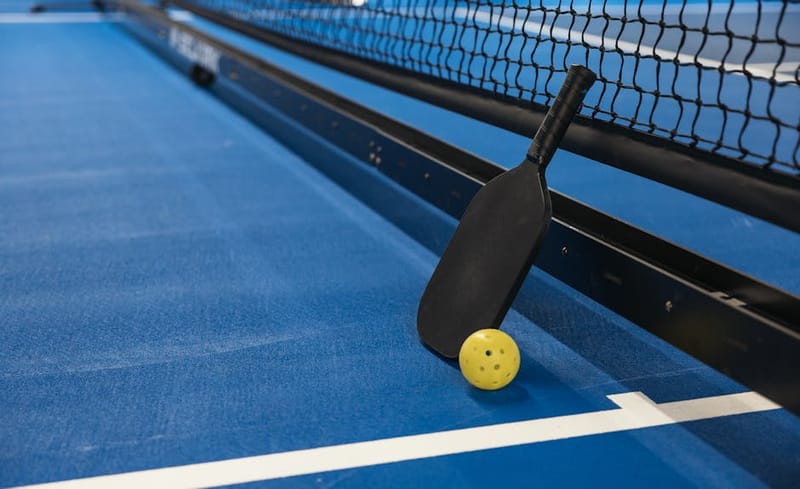
Pickleball scoring is the single most confusing part of the game for newcomers, and the reason is unglamorous: there are two completely different systems in active use, and most UK clubs use the older one without ever telling you it's the older one. Get the basics right and you'll spend your first few sessions learning shots, not arguing about whose serve it is. If you're entirely new to the sport, our UK beginner's guide to pickleball covers the basics - court, equipment, etiquette - before you tangle with the scoring conventions below.
How do the two pickleball scoring systems differ?
Both systems use the same court, the same paddles, the same two-bounce rule and the same non-volley zone. What differs is when a point is awarded and how the score is called.
Traditional (side-out) scoring is the system written into the official IFP/USAP rulebook and the one most UK clubs default to. Only the team that served can win a point. If the receiving team wins the rally, no point is scored - they just earn the right to serve. Games are usually played to 11, win by 2. Tournament finals are often 15 or 21, also win by 2.
Rally scoring awards a point on every rally, whichever team won it, much like badminton or volleyball. It was adopted by Major League Pickleball in 2023 as a televised format, with games typically to 21 (and various freeze-at-20 / win-by-2 wrinkles depending on the tournament). It is faster, easier to follow on a scoreboard, and easier to call - at the cost of changing the strategic shape of close games.
How do the three numbers in side-out scoring work?
The thing that throws beginners is the call. Before every serve, the server announces three numbers, in order: our score, their score, server number. So a call of "four, three, two" means: my team has 4, your team has 3, and I'm the second server on my team.
The server number (the third digit) only exists in doubles, and it's the lever that controls when the serve switches sides. In doubles, both players on a team get a serve before the serve passes to the opposition - except at the very start of the game, where the team that serves first only gets one server.
That "first server is server 2 at the start of the game" rule is the single biggest source of confusion in UK rec play. The first serve of the entire game is called "zero, zero, two" (or "start" at some clubs). When that team loses the rally, the serve goes straight to the other team - not to their partner. From that point on the normal doubles rotation applies.
A typical doubles sequence:
- "Zero, zero, two" - first serve of the game
- Receiving team wins the rally → side-out → serve goes to the other team
- "Zero, zero, one" - first server of the new team starts
- Server 1 wins a rally → "one, zero, one" - they keep serving, score increased by one
- Server 1 loses a rally → serve passes to server 2, score stays the same → "one, zero, two"
- Server 2 loses → side-out, serve to the other team → "zero, one, one"
In singles, the call is just two numbers - your score then theirs - and the server alternates the court they serve from based on whether their score is even (right court) or odd (left court).
How does rally scoring work?
Rally scoring strips the system down. The call is two numbers: server's score, receiver's score. There is no server number because every rally awards a point regardless of who served, so the rotation is mechanical: a team's two players still alternate serves between them, but the choreography no longer affects the score.
Games are usually first to 21 with various "win by 2" tweaks. Major League Pickleball's current ruleset uses freeze at 20: at 20-20 the next point wins, no win-by-2 requirement. Other rally-scoring tournaments use straight win-by-2 to 21 or sometimes a cap at 25.
The practical effect on play is large. In side-out scoring a team can claw back from 0-10 because the opposition has to keep serving (and winning rallies) to close it out. In rally scoring 0-10 is genuinely close to lost, because every rally the leading team wins is another point. Players who learn pickleball on rally scoring tend to be more aggressive on returns because every rally is worth a point regardless of who served it.
Where is each scoring system used in the UK?
UK club nights and casual rec play: almost always traditional side-out, games to 11 win-by-2. This is the format Pickleball England uses for its sanctioned events and the one most coaches teach first.
UK club ladders and box leagues: traditional side-out is the norm. A few clubs have experimented with rally scoring to fit more matches into a fixed session window, but it's still the exception.
UK tournaments and ranking events: traditional side-out, to 11 in early rounds and 15 or 21 in later-stage matches.
Televised pro pickleball: Major League Pickleball uses rally scoring; PPA Tour matches generally use traditional. So if you've watched any UK coverage and felt the scoring looked different between events, that's why.
If you turn up to a session and don't know which system they're using, the easiest tell is the call. Three numbers means traditional; two numbers and points being awarded on receiver wins means rally.
What are the common pickleball scoring mistakes?
Calling the wrong server number. In traditional scoring, the third number is which server you are on your team, not the cumulative serve count. After a side-out you reset to server 1. After your partner loses their serve you become server 2 for the rest of that service game.
Forgetting to call before serving. The score must be called clearly before contact. Calling it after a winning serve doesn't count and the receiver can request a replay if they genuinely didn't hear it.
Switching sides at the wrong moment. In doubles, partners only swap sides while their team is serving and only after a point is scored on that serve. You do not swap after losing a rally. In singles, the server's score (even = right court, odd = left court) tells you which side to serve from.
Treating a let on the serve as a fault. A serve that clips the net and lands in the correct service box used to be a let-and-replay in older rules. As of the 2021 USAP rule changes adopted by Pickleball England, a serve that clips the net and lands in is a live ball - keep playing. A serve that clips the net and lands short, wide or in the kitchen is a fault as normal.
Quietly playing on past 11-9. Games are win-by-2, so 11-10 is not game over. Keep playing until one side leads by two clear points or hits the cap if there is one (some tournaments cap at 15 or 21 to keep matches on schedule).
How should you call the score?
The hardest part isn't the rules - it's tracking the numbers under pressure. Three habits help.
Call loudly enough that the receiver clearly hears you. If the score is wrong, this is when it gets corrected. Mumbled calls are the main reason scoring disputes happen later in a game.
Pause briefly after the call before serving. Gives the receiver a beat to register the score and gives you a beat to set your feet. A fast call followed by a fast serve causes more service faults than any technique flaw.
If you lose track, pause and reconstruct. Don't guess. Walk through the last few rallies: who served, who won the rally, did the serve switch. UK club rules usually allow a polite "can we check the score?" between rallies. Most opponents prefer that to a row at 9-9.
Frequently asked questions
Why does the first server of a game say 'two' instead of 'one'?
How long does a typical pickleball game take?
Do UK tournaments ever use rally scoring?
What happens if both teams call a different score?
Is rally scoring going to replace traditional scoring?
Can a beginner just start serving without learning the calling convention?
Read the rules in full
Scoring is one section of the wider rulebook. Our complete UK rules guide covers serves, the kitchen, faults, line calls, and what's changed in the last two rule cycles.