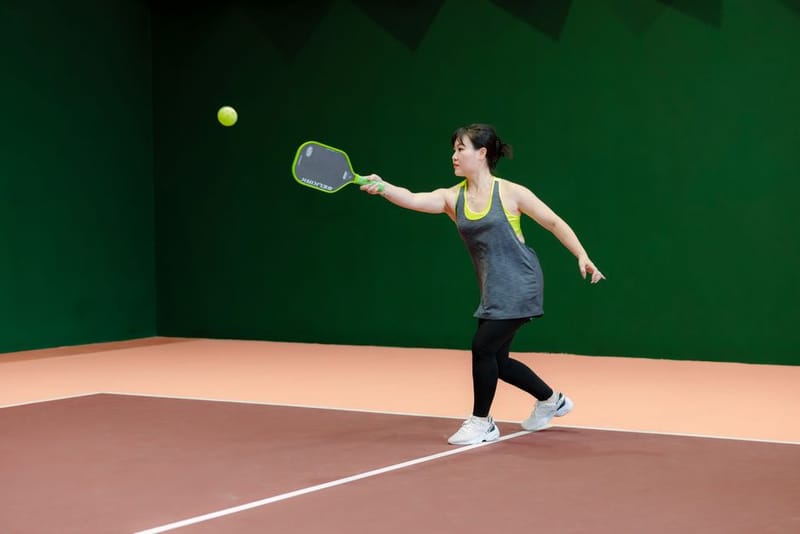
Pickleball Singles Strategy (UK 2026)
Pickleball singles strategy for UK players: how it differs from doubles, serving and returning, court positioning, fitness and the tactics that win.

Most pickleball is played as doubles, but singles is a brilliant, brutal test - one player, the whole court, nowhere to hide. The tactics that win doubles don't all transfer, so if you're stepping onto a singles court for the first time, you need a different game plan. Here's how singles pickleball really works and the strategy that wins it.
How is singles different from doubles?
The court is the same size, but now one player covers all of it. That changes everything:
- The serve and return become weapons. In doubles, the serve is just a way to start the point; in singles, a deep, well-placed serve immediately pressures your opponent.
- Depth beats touch. The soft dinking game that dominates doubles matters far less. Singles rewards deep, penetrating shots that push your opponent back and open the court.
- Fitness is decisive. Covering the whole court means singles is genuinely demanding - movement, recovery and stamina often decide matches more than shot quality.
- The kitchen is less of a battleground. Long dink rallies at the non-volley zone are rarer; you spend more time moving your opponent side to side.
What is the best singles serving strategy?
Use the serve to take control from the first ball:
- Serve deep. A deep serve pushes your opponent back behind the baseline, making their return weaker and buying you time to take the initiative.
- Vary placement. Mix serves to the backhand, wide to pull them off court, and occasionally at the body. Predictable serves get attacked.
- Use your strong side. In singles you serve from the side matching the score (even score = right, odd = left), so plan which serve you'll use from each side.
Get your serve technique solid first - see our serving guide - then layer in placement and depth.
How should you position and move in singles?
Positioning in singles is about recovery, not holding the net:
- Recover to the centre of the baseline after each shot, so you can cover both sides. The middle of the baseline is your home base, not the kitchen line.
- Only approach the net behind a strong shot. Coming in behind a weak shot in singles is risky - your opponent can pass you down either sideline. Approach when you've forced a defensive reply.
- Move your opponent, then attack the space. Hit deep and wide to drag them off court, then go behind them or into the open court they've vacated.
Court positioning is the backbone of singles - our doubles strategy guide covers the team version, but singles flips the priority from net control to baseline coverage.
What shots win singles points?
The singles shot priorities differ from doubles:
- Deep drives to keep your opponent pinned at the baseline.
- Angles - sharp cross-court shots that pull your opponent wide and open the court for the next ball.
- The passing shot - when your opponent approaches the net, drive past them down the line or cross-court rather than trying to lob (lobs are higher-risk in singles).
- The occasional drop - a well-disguised drop shot punishes an opponent stuck deep behind the baseline, but use it sparingly.
Power and depth do more in singles than the soft game; save the patient dinking for doubles.
Frequently asked questions
Is pickleball singles harder than doubles?
What's the best serve in pickleball singles?
Where should I stand in pickleball singles?
Do you dink in pickleball singles?
How do you win at pickleball singles?
Pickleball Doubles Strategy UK 2026
How to Serve in Pickleball
Pickleball Rules Explained