Is Pickleball Good Exercise? Calories and Benefits
Is pickleball good exercise? Yes - a recreational hour burns around 350 calories and delivers a genuine cardio workout. Here's what the research shows.
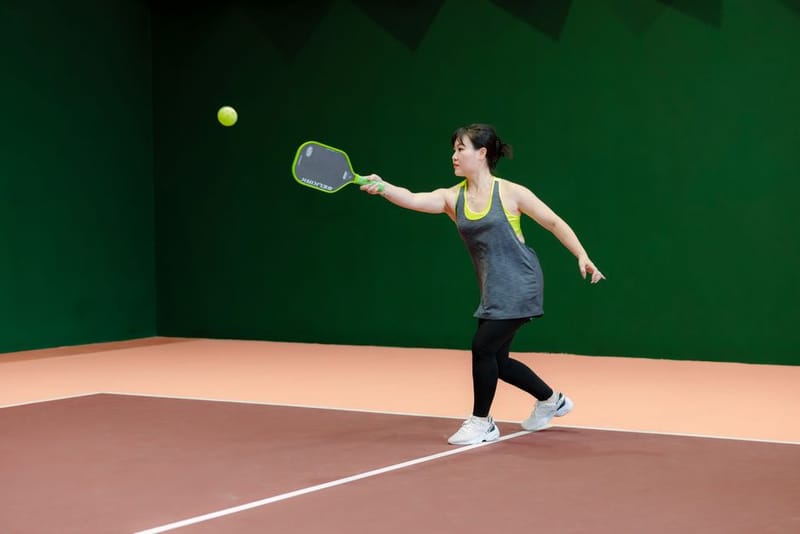
Pickleball is the fastest-growing sport in the UK, and part of the appeal is that it is genuinely good for you without feeling like a workout. But how many calories does it really burn, and does it count as proper exercise? Here is what the research actually shows.
How many calories does pickleball burn?
A recreational hour of pickleball burns around 350 calories for the average player. A 2023 East Carolina University study measured recreational players burning roughly that, with heart rates sitting in the 108-134 bpm range. The figure scales with intensity and body weight: easy social play sits nearer 250-350 an hour, while fast, competitive singles can burn 500-700 or more.
The reason it adds up is that pickleball is stop-start interval exercise: short bursts of sprinting, lunging and reaching at the kitchen line, repeated for an hour. That keeps your heart rate elevated and burns close to four times the calories of a walk over the same time.
Is pickleball a good cardio workout?
Yes. On the standard intensity scale, pickleball rates from about 5.5 METs for drilling up to 9.0 METs for tournament play (a MET, or metabolic equivalent of task, measures how hard an activity works your body relative to sitting still). Recreational competitive play sits around 8.0, which is firmly in the vigorous band - anything above 6 METs counts as vigorous activity.
That matters because the UK Chief Medical Officers' physical activity guidelines recommend at least 150 minutes of moderate (or 75 minutes of vigorous) activity a week. Two or three games of pickleball comfortably clear that, while improving heart health, circulation and endurance.
What does pickleball do for your body?
Pickleball is close to a full-body workout. The footwork - constant small steps, splits and lunges around the court - builds leg strength, balance and the kind of agility everyday training often misses, while the quick reactions at the net sharpen hand-eye coordination and reflexes. The upper body works through serves, drives and volleys.
It is also lower-impact than running or singles tennis, with a smaller court and less ground to cover, which is a big part of why it suits such a wide range of ages and fitness levels.
Is pickleball good for weight loss?
It can help. Burning around 350 calories an hour, two or three times a week, builds a meaningful calorie deficit alongside sensible eating - and because pickleball is sociable and fun, people stick with it far better than with a treadmill. Consistency is what drives weight change, not any single session, and the sport's low barrier to entry makes that consistency realistic. As ever, you cannot out-play a poor diet, so pair regular games with good eating.
Is it suitable for older or less active players?
This is where pickleball really stands out. The compact court, slower ball and simple rules make it accessible to beginners and older players who would find tennis or running too demanding, yet it still delivers a vigorous cardio workout. It is one of the few sports that is genuinely easy to start in your 60s or 70s while still raising your heart rate. Anyone returning to exercise or managing a health condition should check with their GP first, then ease in with social sessions before stepping up the intensity.