How to Return Serve in Pickleball (UK 2026)
Master the pickleball return of serve: where to stand, how to hit it deep, the return-and-rush move, and how the two-bounce rule shapes your shot.
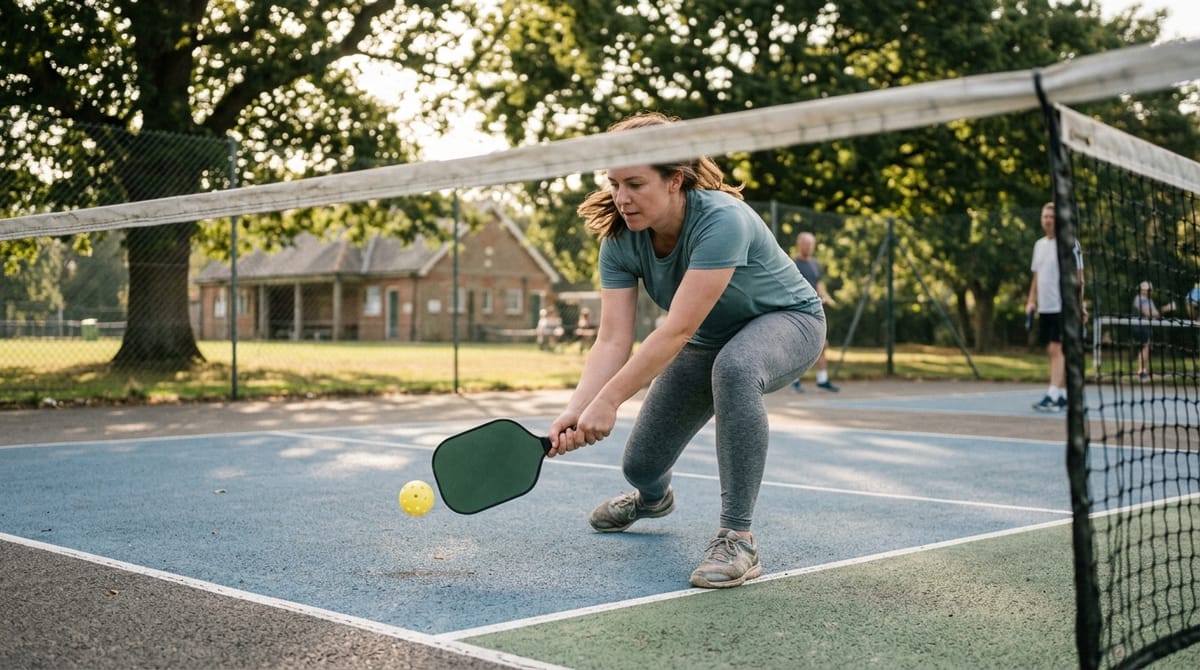
The return of serve is the most under-rated shot in pickleball. Hit it well and you cancel the serving team's advantage before the rally has properly begun; hit it short and you hand them an easy put-away at the net. The return is also the only shot where you have plenty of time, because the rules force the ball to bounce before anyone can attack it.
This guide covers where to stand, how to hit a deep return, the return-and-rush move that gets you to the kitchen line, and how the two-bounce rule decides your positioning. If you are still sharpening your own delivery first, read our companion guide to serving in pickleball.
Why is the return of serve so important?
Pickleball is won at the kitchen line. The team that gets both players to the non-volley zone (the kitchen - the seven-foot zone either side of the net where hitting the ball out of the air is illegal) first usually controls the rally, because they can hit down on the ball while the other side is still reaching up from deep court.
The return of serve is your fastest route to that line. The two-bounce rule (also called the double-bounce rule - the ball must bounce once on each side before either team may volley) means the serving team cannot rush the net behind their serve. So while they wait at the baseline for your return to bounce, you get a free walk to the kitchen. A deep, floating return maximises that walk; a short return cuts it short and lets the servers attack.
Where should you stand to return serve?
Set up around one to three feet behind the baseline. Standing deep gives you room to move forward into the ball rather than backing up, and it means a fast or deep serve still lands in front of you. Beginners who stand on the baseline get jammed by good serves and have to swing while retreating - a recipe for a short, weak return.
Your partner takes a very different position. They should already be standing at the non-volley zone line, ready to take control of the net the moment your return clears it. One player deep, one player up: that staggered shape is correct and intentional for the return.
How do you hit a deep return?
Set up behind the baseline
Feet roughly shoulder-width apart, weight balanced, paddle out in front. Read the server's contact point early so you can judge depth.
Take it after the bounce with a compact backswing
You must let the serve bounce. Use a short, controlled backswing - a big windup is unnecessary and costs you accuracy. A continental or eastern grip suits both forehand and backhand returns.
Aim high over the net
Target three to five feet of clearance above the net. Height equals depth and time: a high return travels deep and stays in the air longer, giving you extra seconds to advance.
Drive it deep, down the middle
Land the ball within a few feet of the opponents' baseline. A middle target reduces the angle they can reply with and, in doubles, can cause confusion over who takes it.
Recover forward immediately
As soon as you finish the stroke, move toward the kitchen line. The return is the start of your approach, not a standalone shot.
What is the return-and-rush strategy?
Return-and-rush is the habit of treating every return as the first step of a sprint to the net. The instant the ball leaves your paddle, you move forward to join your partner at the non-volley zone line. The deeper your return, the further you can travel before the serving team makes contact with their third shot.
One refinement matters: do not run blindly all the way in. As the opponent is about to strike their third shot, plant your feet in a split-step so you are balanced and ready to react. From there you can move onto a fast drive or step in on a soft third shot drop. Charging through the split-step is the most common way intermediate players get passed.
How does the two-bounce rule shape your return?
The two-bounce rule is the single biggest reason the return is so valuable. The serve must bounce before you return it, and your return must bounce before the serving team can hit it. Only after those two bounces may either side volley the ball out of the air. You can read the full mechanics in our guide to the kitchen and non-volley zone rules, and the rule is summarised in the Wikipedia entry on pickleball.
Because the servers are legally stuck at the back until your return bounces, depth is everything. A return that lands deep keeps them behind the baseline and forces them to hit their third shot from the hardest position on the court. A short return lets them step in, take the ball early, and crowd the net before you have arrived.
Should you return cross-court or down the line?
Cross-court is the safer default. The diagonal court is longer, so a cross-court return gives you more margin for depth before the ball sails out. It also pulls the opponent wide, opening the middle for your next shot.
Down the middle is the smarter aggressive option in doubles. A return splitting the two opponents reduces their reply angles and can trigger a moment's hesitation over who takes it. Save the down-the-line return for when you have spotted a specific weakness - it is the lowest-margin choice because the straight court is the shortest.
What are the most common return-of-serve mistakes?
Returning too short
A shallow return lets the serving team move in early and take the net. Aim deep even at the cost of a little pace.
Standing on the baseline
Set up a step or two back so a fast serve lands in front of you and you can move forward through the ball.
Hitting it too low and flat
A flat, fast return clears the net by inches and often drops short. Add height for depth and time to advance.
Forgetting to move in
The return is your ticket to the kitchen. Stopping to admire it leaves you stranded in no-man's-land.
Skipping the split-step
Running through the split-step leaves you off balance and easy to pass when the third shot comes back hard.
Frequently asked questions
Can you volley a return of serve in pickleball?
Should you return serve deep or short?
Where should the returner's partner stand?
What grip is best for returning serve?
Why aim the return high over the net?
How to Serve in Pickleball (UK 2026)
Third Shot Drop: Technique and Drills
Pickleball Kitchen Rules Explained