Best Pickleball Paddles UK 2026: Picks by Budget Tier
Citation-driven picks across four UK budget tiers - Decathlon Perfly to JOOLA Perseus Pro IV to CRBN TruFoam Genesis. What to buy and what to skip.
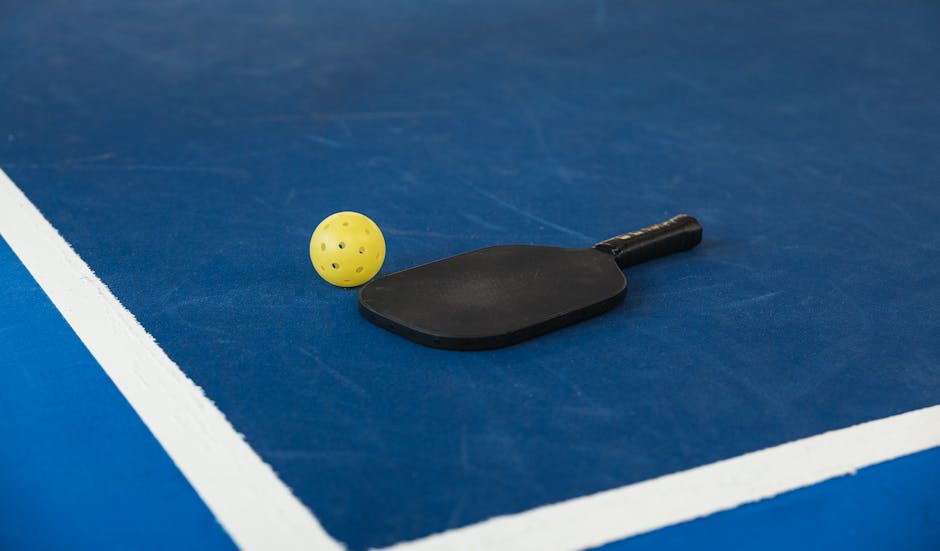
UK paddle buying in 2026 splits sensibly into four price tiers: a £20-30 entry-level (the Decathlon Perfly leads this band), £40-80 for a step-up beginner-to-intermediate paddle, £80-150 for serious intermediate kit, and £150-250 for the premium thermoformed-carbon / foam-enhanced top of the market. This guide picks a paddle at each tier, names what each is genuinely best for, and is honest about where the marketing has run ahead of what the paddle actually delivers in a UK retrofit context.
Editorial disclosure: we have not personally tested every paddle in this guide. Picks are drawn from cross-referenced specs, manufacturer documentation, and a minimum of two independent third-party reviews per recommendation. The published evidence on pickleball-paddle performance is genuinely good (Pickleball Effect's database tracks specs and play-tested ratings across 100+ models; Pickleheads' editorial team independently reviews competitive paddles) and a well-cited buying guide is more useful for most UK buyers than a single first-person opinion. Last reviewed: 12 May 2026.
1. What the spec sheet actually means
Before the picks, four specs that actually matter - drawn from Pickleball Effect's specs database and supporting documentation:
- Weight (7.3-8.5 oz typical). Static weight is a useful starting point but doesn't fully predict how heavy a paddle feels in play - swing weight (a function of weight and where the weight sits) matters more. Beginners typically prefer 7.5-8.0 oz; experienced players push to 8.0-8.5 oz for power.
- Balance point. A head-heavy paddle (high balance point) carries through the ball with more momentum but is harder to manoeuvre at the kitchen line. A handle-heavy paddle (low balance point) is faster but lacks pop. Most modern paddles publish their balance figure; check it.
- Core material and thickness. JustPaddles' core guide notes polymer / polypropylene honeycomb is the dominant core material - flexible, soft-touch, maximum control. Core thickness ranges from 11mm (faster, less forgiving) to 16mm (plusher, more dwell on the ball). 13-16mm is the comfortable retail mainstream.
- Surface material. Fibreglass (cheaper, more pop, less spin); graphite (controlled, less power); raw carbon fibre (the 2025-2026 mainstream - high spin, controlled power, premium feel). The new arrival in 2026 is foam-core paddles (CRBN's TruFoam Genesis line) which displace some of the honeycomb-polymer structure with foam for a distinctive plush feel.
One useful empirical finding: Helios's analysis suggests proper weight-distribution design can expand the sweet spot by up to 30% via higher moment-of-inertia (MOI) values - practically, perimeter-weighted thermoformed paddles are more forgiving on mishits than centre-weighted older designs.
2. £20-30 entry tier - Decathlon Perfly
Pick: Decathlon Perfly at £30. It is the easiest first paddle to buy in the UK in 2026.
Why it works as an entry-tier pick:
- UK availability is the easiest in the market. Decathlon's UK stores stock it, so you can walk in, pick one up and play the same day, with fast, reliable online ordering and no US-import shipping wait or customs surprises.
- A fibreglass face over a polypropylene core gives acceptable control for a budget paddle. It is functional for casual social play, though it generates far less spin than a carbon-faced paddle.
- The sweet spot is forgiving enough for beginners to make consistent contact while they build the basics (see the beginner's guide).
- Decathlon's 365-day return policy makes it a genuinely low-risk way to test whether pickleball will stick.
The catch: the Perfly is not USAPA-approved, so it is not for sanctioned tournament play, and the build quality reflects the £30 price. If you already know you are committed, Decathlon's own step-ups are worth a look - the Kuikma Open (glass-fibre faces, polypropylene honeycomb core, around 225g) and the carbon-fibre Kuikma React (around 235g, wider head, more forgiving) sit just above the Perfly. Our Decathlon Perfly review compares all three Decathlon pickleball paddles. Upgrade to the £60-80 carbon tier once you can consistently place the ball.
Avoid at this tier: unbranded "learn pickleball" two-paddle bundles from generic marketplace sellers. Build quality is often poor, and the materials are typically wood or low-grade composite rather than fibreglass-on-polymer.
3. £60-80 step-up tier - first carbon-faced paddle
At £60-80, you move into the first carbon-faced paddles and meaningfully more capable kit. Three picks at this tier are competitive (verify current UK availability):
- Selkirk SLK Halo - Selkirk's entry sub-brand. Raw-carbon face, polymer core, 8.0 oz typical, well-regarded for control. UK availability through PDH Sports and pickleball.co.uk; reliable.
- Engage Encore Pro 6.0 - Engage's mid-tier graphite-faced paddle. Classic shape, gentle on the arm, well-suited to the dink-game phase that new players spend most of their time in.
- JOOLA Solaire FAS - JOOLA's gateway carbon-faced paddle. The entry point into the broader JOOLA range. UK availability via JustRackets, Pickleball UK Shop.
The defining feature of this tier is the move to raw carbon fibre as a face material (on the Halo and Solaire), which generates substantially more spin than the fibreglass face of the entry-tier paddles. The trade-off is a slightly less forgiving sweet spot - if you're still routinely mis-hitting, defer this upgrade. Pickleheads' beginner-paddle round-up consistently puts the SLK Halo near the top of this tier; RacketRise's UK guide agrees on the Engage and Solaire.
For most UK club players, this is where you settle long-term. The £150+ tier is materially better for tournament-grade play, but for weekend round-robins and social leagues, the £80 paddles are the practical sweet spot.
4. £130-180 serious intermediate - JOOLA Perseus Pro IV 16mm
Pick: JOOLA Perseus Pro IV 16mm at £130-180. This is the power-paddle market leader in 2026 and the most-recommended single paddle in the third-party review press.
What makes the Pro IV stand out:
- Foam-enhanced power-paddle design. An added section of high-density foam inside the bottom corners/throat area allows the paddle to flex more than prior JOOLA Perseus generations, which adds forgiveness and enhances feel, power, and dwell time. Independent reviews from Pickleball Effect and Pickleheads consistently rate the Pro IV as the leading control-with-power paddle at this price point.
- Edge cases at the IV generation: the IV model offers almost the same performance as JOOLA's subsequent Pro V/VI releases at a meaningfully lower price point - the marginal upgrade to the latest generation is rarely worth the £40-60 price premium for a club player.
- Raw carbon fibre face with the standard JOOLA spin-grit pattern; 16mm core thickness for plush dwell on the ball.
- UK availability: generally reliable via UK Pickleball Shop, PDH Sports, and direct JOOLA UK channels. Stock can be intermittent on the latest generations; the Pro IV has the cleanest availability of the current Perseus line.
Who it suits: intermediate players who have settled their basic mechanics and want a paddle that delivers serious power on drives and overheads without sacrificing the soft-game control needed for kitchen-line rallies. New players will find it unforgiving; weekend social players will rarely use the extra capability.
Alternatives at this tier worth considering if the Pro IV is out of stock: Six Zero Double Black Diamond Control (a more control-biased counterpart, well-reviewed for the kitchen-line game), or the Selkirk VANGUARD Pro mid-shape (a slightly older design but a long-standing tournament favourite).
At the top of the market, two distinctly different paddles split the buyer base in 2026:
CRBN TruFoam Genesis - £200-£250
The CRBN TruFoam Genesis line is the standout 2025-2026 release in the premium category. The distinctive feature: a foam core instead of the standard polymer honeycomb, giving a combination of plush dwell, stability, and controlled power that the honeycomb-core paddles cannot match. Pickleball Effect's hot list puts the TruFoam Genesis at the top of its 2026 control-paddle ranking; The Dink Pickleball's reviewer predictions reinforce the position.
UK availability: less reliable than the JOOLA / Selkirk lines - CRBN is a US-headquartered specialist and stock cycles intermittently through UK retailers. Check pickleball.co.uk and PDH Sports for current availability before committing.
Selkirk VANGUARD Pro Invikta - £200-£250
The traditional premium choice for all-court players. Long-handle, elongated shape, raw carbon fibre face, polymer honeycomb core at 13-16mm depending on variant. More forgiving than the older Selkirk power-paddle lines, well-balanced between control and power. Established UK availability via PDH Sports and direct Selkirk UK channels.
Who buys at this tier?
Honestly: tournament players, coaches, and players who play 4+ times per week. The performance delta over the £130-180 tier is genuine but modest - most weekend players will not exploit it. The £200-250 paddle is a reward for established mechanics, not a shortcut to them.
6. UK availability - what to verify before buying
The single biggest UK-specific buying hazard is paddle availability. The US-headquartered specialist brands (JOOLA, Selkirk, CRBN, Engage, Six Zero) all have UK distribution channels but the depth of stock varies significantly. A short pre-purchase checklist:
- UK retailer first. UK Pickleball Shop, PDH Sports and Decathlon UK are the most reliable for the major brands. UK warranty and 14-day return windows apply.
- Be cautious of direct US imports. Customs duty, VAT, and DHL handling fees typically add £30-60 to a paddle's list price for UK delivery. The 2-3 week shipping window also matters if you want to play this weekend.
- Confirm the exact model variant. Many paddles have multiple thickness options (11mm vs 14mm vs 16mm) and shape variants (mid-elongated vs standard vs hybrid). The model name alone doesn't fully specify; check the SKU.
- Check return policy specifically for paddles. Some retailers exclude paddles from standard return policies because of the difficulty re-selling "used" specialist equipment. Decathlon's blanket 365-day return policy is genuinely unusual at this tier.
Avoid: paddle deals on Amazon UK from sellers whose primary business isn't pickleball. The grey market in counterfeit JOOLA and Selkirk paddles is real, and the visual difference between a genuine paddle and a counterfeit is hard to spot until you play it.
7. What to skip - paddle marketing claims that don't pay off
Three categories of marketing claim that don't translate to meaningful play difference for most UK players:
- "Tournament-approved" / USAPA-approved markings. Useful only if you're playing sanctioned USAPA tournaments. UK club and Pickleball England competition use a separate approval scheme; verify directly with Pickleball England for tournament play rather than assuming USA-approval transfers.
- Headline RPM (revolutions-per-minute) spin numbers. Manufacturer-published spin numbers (often 2,200+ RPM) are useful for cross-brand comparison but the practical difference between a 2,000-RPM paddle and a 2,300-RPM paddle is mostly imperceptible to non-tournament-level players.
- Custom grip wrap and weight-tape kits sold separately. Most premium paddles come with grip and balance dialled-in from the factory. The custom-weighting market exists for tournament players who actually measure swing weight; for everyone else it's an upsell.
And one category worth paying for if you have the option: longer handles (5.5-6 inches) if you're switching from tennis or coming from a two-handed backhand. The standard 5-inch pickleball handle is uncomfortable for tennis-converts; the long-handle variants of most premium paddles are a real ergonomic upgrade.