Pickleball Lob Shot Technique UK 2026
Pickleball lob shot technique UK 2026: when to use, grip, swing path, target zones, common mistakes, and how to defend against opponents' lobs.
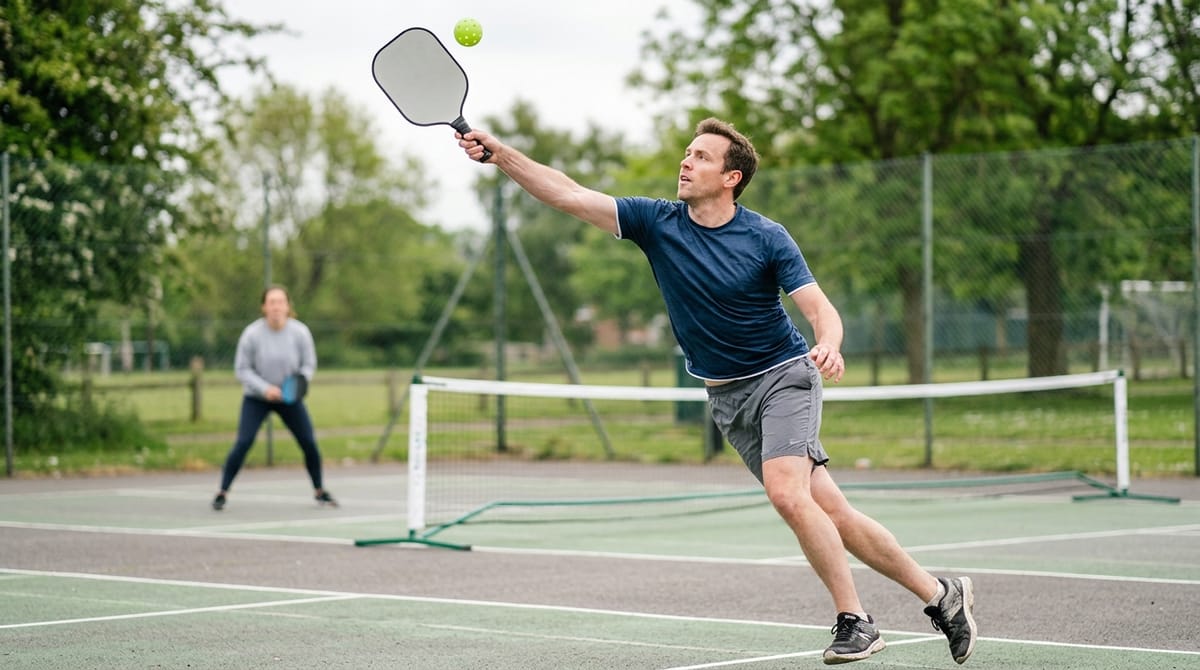
The lob is pickleball's most situational shot. Used well, it flips control of a point - opponents move from aggressive net positions to defensive baseline retrieval. Used badly, it sets up an easy overhead smash and loses the rally outright. This guide covers when to lob, how to do it, and where most UK club players go wrong.
When should you lob in pickleball?
The lob is a high-risk, high-reward shot. Five situations where it makes sense:
- Opponents are tight to the kitchen line and short. Both opponents standing within 1 foot of the kitchen line creates the classic lob window. Their backward step is delayed by needing to turn-and-retreat from a forward stance.
- You are at the kitchen line and have time. You need an unhurried setup to lob successfully. Rushed lobs go short or wide.
- The wind is at your back (outdoor only). Tailwinds extend lob depth meaningfully. Headwinds kill lobs - don't try one against a strong headwind.
- Your opponents are slower-footed or older. The lob exploits foot speed differences. Worth more against opponents who don't retreat fast.
- You're being beaten consistently at the kitchen exchange. A well-placed lob breaks the pattern even if it doesn't win the point outright - it forces opponents to play different shots.
Five situations where you SHOULDN'T lob:
- You're already on the run or stretched wide.
- You're playing into bright lights or sun (lobs disappear, but so does your tracking when they come back).
- Your opponent at the back has a strong overhead smash. You're feeding their best shot.
- You're playing indoor in a low-ceiling hall. UK leisure centres vary - some 5m ceilings are too low for a clean offensive lob.
- The score is close late in a game and you've not warmed up the shot. Practise lobs at 9-5, not at 10-10.
How do you hit an offensive lob?
The offensive lob is a controlled flick from the kitchen line with topspin. Six steps:
- 1. Set up early. Read the rally and decide to lob before the ball is at your paddle. Late decisions produce flat lobs that get smashed.
- 2. Continental grip. The same grip you use for serves and volleys. Don't switch grips for the lob - too slow.
- 3. Knees bent, paddle low. Start with the paddle below ball height and your knees in a load position.
- 4. Low-to-high swing path. The paddle travels upward at about a 45-degree angle through contact. Steeper than a standard volley.
- 5. Brush up the back of the ball. Topspin comes from the paddle face moving upward across the back of the ball at contact. Don't slap - brush.
- 6. Follow through high. Finish with the paddle pointing toward the sky over your lead shoulder. A low follow-through means a flat lob.
Target zone: the back third of the court on the opposite side, between the baseline and 3 feet inside it. Cross-court is the safer option (more distance, more margin); down the line is higher-risk but harder to retrieve.
How do you hit a defensive lob?
The defensive lob is a different shot - the goal isn't to win the point but to extend it. Three differences from the offensive lob:
- Higher trajectory. 20-30 feet rather than 10-15. Buy time, don't try to thread a target.
- Less topspin, more height. A flat or slightly underspin lob hangs in the air longer than a topspin lob. Underspin lobs come from a continental grip with a slight open face and a longer follow-through.
- Target the middle. Don't aim for a corner - aim for the deepest part of the centre court. You're buying recovery time, not winning the point.
The defensive lob is your escape valve when you've been pushed wide, lifted off-balance, or otherwise can't put the ball away. It's an underrated shot at UK club levels - most 3.0+ players don't practise it enough.
What are the most common pickleball lob mistakes?
Six errors UK coaches see consistently:
- Lob short. Anything that lands in the middle third of the court is an invitation to smash. Make the depth or don't try the shot.
- Lob without topspin (offensive). A flat offensive lob hangs in the air longer and is easier to track and put away. Brush up the back of the ball.
- Lob when off balance. Lobs require time and weight transfer. Off-balance lobs go short.
- Lob into the lights or sun. Self-induced blindness. The ball comes back fast.
- Lob the same place every time. Opponents pattern-recognise. Mix cross-court, down-the-line, occasional middles.
- Lob from a losing position late in a game. Pressure shrinks margin. Don't add high-margin shots when you can't afford to miss.
How do you defend against an opponent's lob?
If you're at the kitchen and your opponent lobs over you, three responses:
- Smash the short lob. If you can take the ball above net height before the bounce, smash it. The shorter the lob landed, the more aggressive your smash should be.
- Bandeja-equivalent on the deep lob. If you have to retreat and the ball is dropping behind you, switch to a high-controlled drive (the pickleball equivalent of padel's bandeja). Push the ball back deep and try to reset the rally.
- Reset with a high lob of your own. If you can't put the ball away cleanly, return the favour - lob back, take the time you need to get back to the kitchen, and reset the exchange.
The most common mistake when retrieving a lob is trying to drive the return - it gives the lobbing team an easy ball at the net. Reset first, attack later.
How do you practise the pickleball lob?
Three drills used in UK club coaching:
- Static feed lob. Partner feeds from across the net to your kitchen position; you play 20 cross-court offensive lobs to the back third. Focus on depth consistency, not power.
- Defensive lob from a wide position. Partner feeds wide; you play a defensive lob to the middle while moving back to a kitchen-recovery position.
- Live point with lob-allowed rule. Play points where lobs are encouraged (not penalised) - forces the decision-making about when to lob vs when to dink vs when to drive.
15 minutes per week of lob practice produces meaningful improvement in 4-6 weeks. Pair this with our pickleball volley mastery guide and doubles strategy guide for the broader shot-and-tactics complement.
Frequently asked questions
Can I lob in pickleball doubles?
What grip do I use for the pickleball lob?
How long does it take to learn the pickleball lob?
Is the offensive lob legal in pickleball?
What height should an offensive pickleball lob reach?
Can a low ceiling indoor venue affect the lob?
The bottom line
For UK pickleball players, the lob is a high-value shot to add once you have your kitchen game solid. The fundamentals are simple - continental grip, low-to-high swing, topspin brush on offensive lobs, height-for-time on defensive lobs. The discipline part is harder - using the lob situationally rather than reflexively, mixing patterns, and not lobbing in tight scores until the shot is consistent.
Start with 15-20 reps a week against a feed, then introduce it to live-point play with explicit lob-encouragement. Within a couple of months the offensive lob becomes a credible weapon against opponents who crowd the kitchen, and the defensive lob becomes your reliable reset shot under pressure.
The formal rules of pickleball, including lob legality, are published by the Pickleball England rule book.