How to Start a Pickleball Club in the UK (2026)
How to start a pickleball club in the UK: finding courts, Pickleball England affiliation, equipment, insurance, running sessions and growing membership.

With pickleball booming across the UK, demand for places to play often outstrips supply - which makes starting your own club one of the most rewarding things you can do for the sport locally. It's more achievable than you might think. Here's a practical, step-by-step guide to getting a pickleball club off the ground.
Step 1: Find courts and secure regular time
This is the foundation, and usually the hardest part - sort it first. Most UK pickleball is played on badminton-lined sports-hall courts at leisure centres, schools and community halls, with portable nets set up for play. Approach local venues about a regular weekly block booking; off-peak daytime and early-evening slots are often available and cheaper.
You'll fit roughly one pickleball court per badminton court, so a hall with several courts lets you run a proper session. Lock in a consistent day and time - reliability is what turns a one-off into a club. Our where to play guide shows how existing clubs use these venues.
Step 2: Get the basic equipment
You don't need much to start:
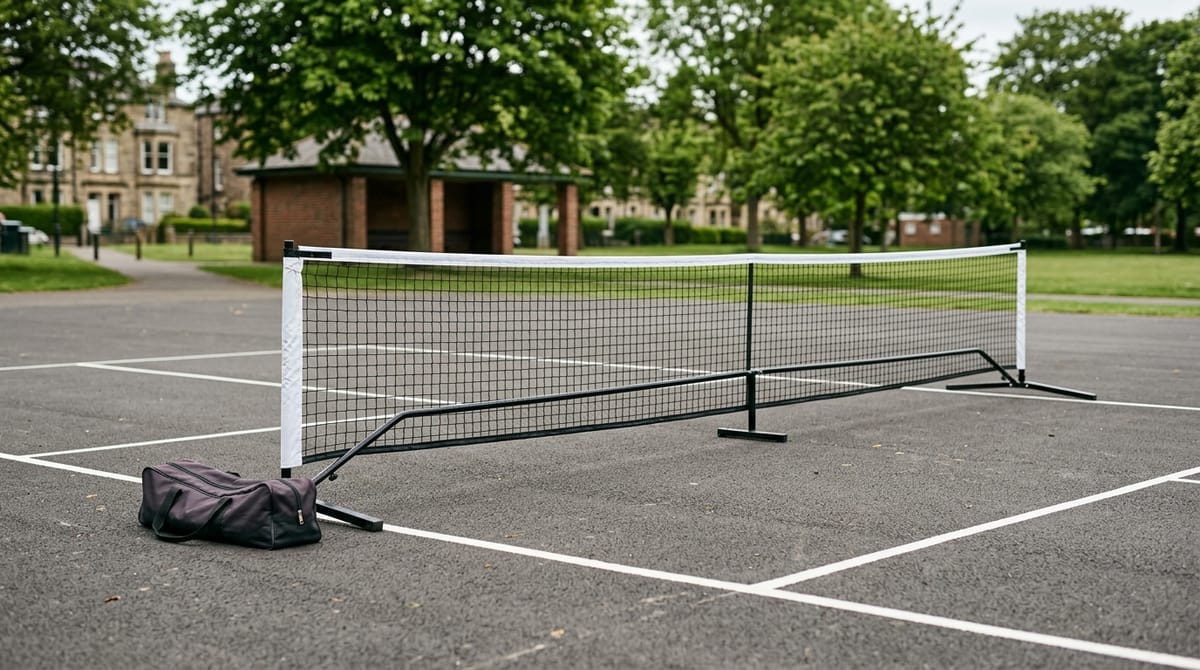
- Portable nets. If the venue doesn't provide them, a couple of portable pickleball nets let you set up courts anywhere with the right lines.
- Loan paddles and balls. A set of spare paddles and indoor balls means newcomers can try the sport without buying kit first - the single best thing for attracting beginners.
- Court-line markers if your hall lacks pickleball lines (tape or temporary markers).
Keep the initial outlay modest; you can reinvest session fees into more kit as the club grows.
Step 3: Affiliate with Pickleball England
Affiliating your club with Pickleball England, the national governing body, gives you real benefits: club and public-liability insurance cover, official recognition, access to resources and coaching pathways, listing in the national club directory, and a route into sanctioned competition for your members. It's the credibility and protection that turns a casual group into a proper club. Check the current affiliation requirements and fees on the Pickleball England site, and see our Pickleball England membership review for what membership offers players.
Step 4: Run welcoming sessions
The session experience is what keeps people coming back:
- Keep beginners' sessions simple and social. A quick rules-and-safety brief, then rotate players so everyone gets games and meets each other. Pickleball's low barrier to entry is its superpower - lean into it.
- Mix abilities thoughtfully. Run a beginner-friendly slot and a more competitive one as numbers grow, so nobody is bored or overwhelmed.
- Have a welcoming host. Someone to greet newcomers, lend a paddle and explain the basics makes the difference between a one-time visit and a regular.
Point new players at our beginner's guide and rules guide so they arrive ready.
Step 5: Promote and grow
Once you have a session running, fill it:
- List the club in the Pickleball England directory and on local court-finder platforms so players searching for your area find you.
- Use local channels - community Facebook groups, the leisure centre's noticeboard, local press, and word of mouth. Pickleball spreads fastest by personal recommendation.
- Run taster events - free or low-cost open sessions are the most effective way to convert curious locals into regulars.
- Build a simple structure as you grow: a booking system, modest membership or session fees to cover court hire and kit, and a small committee to share the load.
Frequently asked questions
How do I start a pickleball club in the UK?
Do I need to affiliate with Pickleball England to run a club?
What equipment do I need to start a pickleball club?
Where can a new pickleball club play?
How do I attract members to a new pickleball club?

Pickleball England Membership 2026

Where to Play Pickleball in the UK
Best Portable Pickleball Nets UK 2026