Pickleball Eye Protection Guide UK 2026
Pickleball eye protection UK 2026: why eye protection matters, ASTM F803 standard, recommended brands, cost framework.
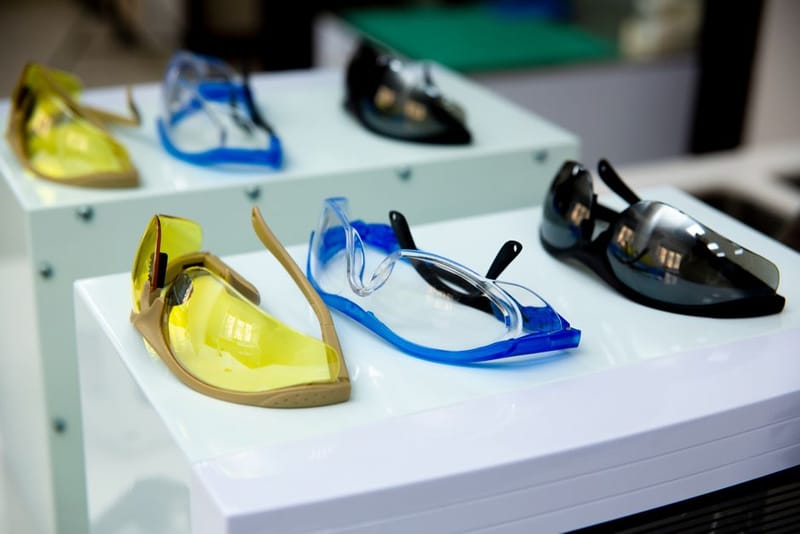
Eye injuries are the most-overlooked safety risk in pickleball. This UK 2026 guide covers why eye protection matters + what to actually buy.
Why eye protection matters in pickleball
The specific risks.
Pickleball has higher eye injury rates than tennis for three structural reasons:
- Close proximity at the kitchen line: pickleball doubles play involves both players standing within 2-3m of opponents at the non-volley zone. Mishit balls travel from very close.
- Lower ball mass + faster recovery: pickleball ball (24g) travels faster + with less drag than a tennis ball (58g), allowing quicker successive shots at close range.
- Paddle clashes: doubles partner paddle-clash incidents are common at the kitchen line; both paddles arrive at the same air space.
- Sun glare on outdoor courts: outdoor pickleball + plastic balls reflect sun differently than tennis felt balls - eye fatigue is meaningful.
Injury severity data (US ER reports - UK data sparse):
- ~10-15% of recreational pickleball ER visits involve eye/face injuries.
- ~1-3% of competitive players report a 'near-miss' eye contact per season.
- Corneal abrasion is the most common injury - painful, requires GP/ophthalmologist visit, usually heals fully in 1-3 days.
- Permanent vision loss is rare but documented - estimated <0.05% of pickleball players over career.
ASTM F803 - the standard to look for
What it means + how to verify.
ASTM F803 is the American Society for Testing and Materials standard for racquetball/squash/pickleball eye protection. The standard tests:
- Impact resistance: lens survives ball impact at 90 mph from 16 feet.
- Frame integrity: frame doesn't fail or come loose on impact.
- Optical quality: minimal distortion under impact.
UK equivalent standards:
- EN 166: European Personal Protective Equipment eye standard. ASTM F803-equivalent for sports use.
- ISO 12312-1: optical quality + impact resistance.
- Most quality sports eyewear carries both ASTM F803 + EN 166 certifications.
What to AVOID:
- Regular sunglasses (NOT impact-rated).
- Polycarbonate sunglasses without ASTM F803 (impact rated for casual use only, not racquet sport).
- 'Sport' branded eyewear without specific F803 / EN 166 marking.
- Cheap (
Recommended brands UK 2026
Per use-case options.
Budget option (GBP 25-40):
- HEAD Impulse Goggles: GBP 25-40. Classic racquetball/squash design adapted for pickleball. ASTM F803 certified. Anti-fog coating.
- Onix VLR Eyewear: GBP 35-50. Pickleball-specific brand. Anti-fog + UV protection.
Mid-tier (GBP 45-75):
- Bolle Tracker II: GBP 45-65. Polycarbonate lens, anti-fog, prescription compatible (insert available).
- Onix VLR Spec: GBP 55-75. More refined fit + finish; clearer optics.
- Pacific X3 Sport Goggles: GBP 50-70. Used by many UK club players.
Prescription wearers (GBP 55-150):
- Liberty Sport Rec Specs: GBP 55-85. Prescription-ready frame with ASTM F803 certification. The standard for prescription pickleball eyewear.
- Bolle Tracker II with Prescription Insert: GBP 60-85.
- Adidas Sport SP6300: GBP 95-150. Premium prescription-compatible sport eyewear.
Premium tier (GBP 80-150):
- Adidas Sport SP6300: GBP 95-150. Premium build, photochromic lens options.
- Oakley Targetline: GBP 110-150. ASTM F803 + Prizm lens technology for clarity.
Anti-fog + outdoor considerations
Practical features.
Anti-fog coating:
- Most quality pickleball eyewear has anti-fog coating (10-50 hour effective life).
- Periodic re-application: anti-fog sprays/wipes ~GBP 5-10.
- Without anti-fog: fog appears during intense play in cool air conditions.
UV protection (outdoor play):
- Look for 100% UV400 marking on lenses.
- Standard on premium tier; check on budget tier.
- UK outdoor play has lower UV exposure than US but still relevant for summer matches.
Tinted vs clear lenses:
- Clear lens: indoor + dawn/dusk play. The default for tournament play.
- Tinted/sunglasses lens: outdoor bright play. Some venues require swap to clear if moved indoors.
- Photochromic (transition): GBP 30-60 premium; adjusts to ambient light.
- Best dual setup: two pairs (clear indoor + tinted outdoor) for GBP 50-80 total.
Tournament requirements UK 2026
Where eye protection is required.
UK pickleball governance is evolving:
- Pickleball England-sanctioned tournaments from 2026: ASTM F803 eye protection increasingly required for under-18 + senior competitive divisions; recommended for all.
- LTA Pickleball events: optional but recommended.
- Local club leagues: highly variable - check club's competition rules.
- Indoor recreational sessions: rare requirement; player discretion.
How to know if your tournament requires it:
- Check event registration page or Pickleball England event listing.
- Bring eye protection regardless - if not required, no harm in wearing it.
- If unsure, contact the tournament organiser before booking.
Cost framework
Budget for a UK player.
Recreational doubles player:
- Budget option (HEAD Impulse): GBP 25-40.
- Lifespan: 2-3 years with normal use.
- Annual cost: ~GBP 10-15.
Tournament + competitive player:
- Mid-tier (Bolle Tracker II): GBP 45-65.
- Lifespan: 3-4 years with normal use.
- Annual cost: ~GBP 12-18.
Prescription-wearing tournament player:
- Liberty Sport Rec Specs + lens: GBP 100-180 total.
- Lifespan: 3-5 years; prescription updates may necessitate re-lensing.
- Annual cost: ~GBP 30-40.